

It’s another of those places that is packed with tourists (particularly when there is a Changing of the Guard), but which Londoners would avoid as if their very souls depended upon it.
I’m talking about the Queen Victoria Memorial that stands in front of Buckingham Palace and from which the elderly Regina Imperatrix (“Queen Empress”) gazes down the Mall towards Admiralty Arch.
This was unveiled by Victoria’s grandson George V in 1911, but was part of a redesign of the whole area in front of the Palace (including the actual front of the Palace) that had been initiated by Edward VII, son of Victoria and father of George in the first decade of the century.
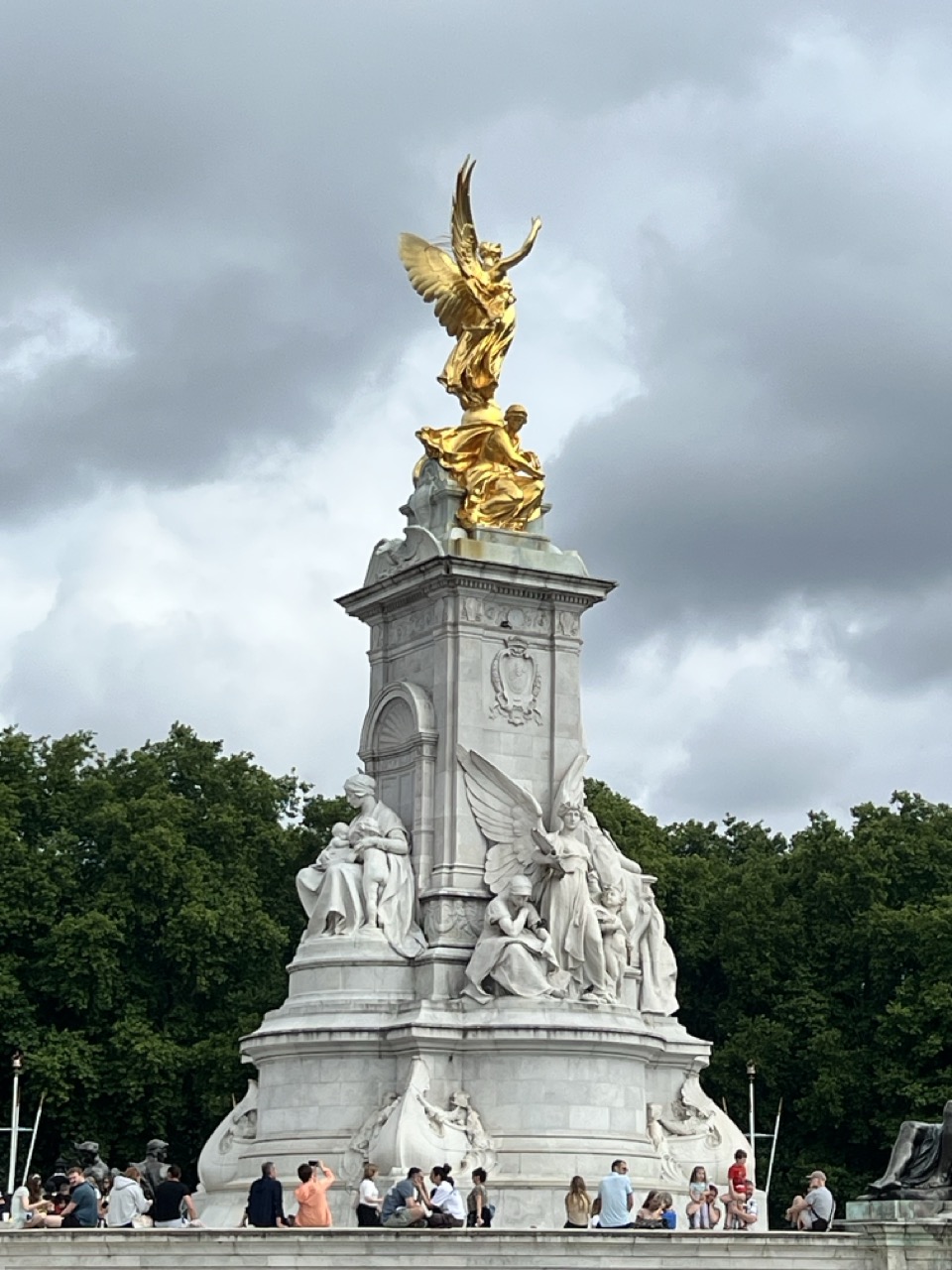
The layout and new facade of the Palace was the work of architect Sir Aston Webb, and the plan included the widening of The Mall to turn it into a grand ceremonial route, the gates surrounding the memorial (paid for by the ‘Dominions’ of the Empire) and the construction of Admiralty Arch itself. (Webb was also responsible for the 1900 extension to the V&A.) The statues around the memorial were done by sculptor Thomas Brock, who was knighted by George V for his efforts.
Victoria had been queen for 63 years – the longest-reigning monarch at that time – and had been on the throne during the huge 19th century expansion of the Empire, when Britain was Top Nation. The monument – and its associated works – thus has that muscular, swaggering, imperious style that characterises Edwardian architecture (“Imperial Baroque”).
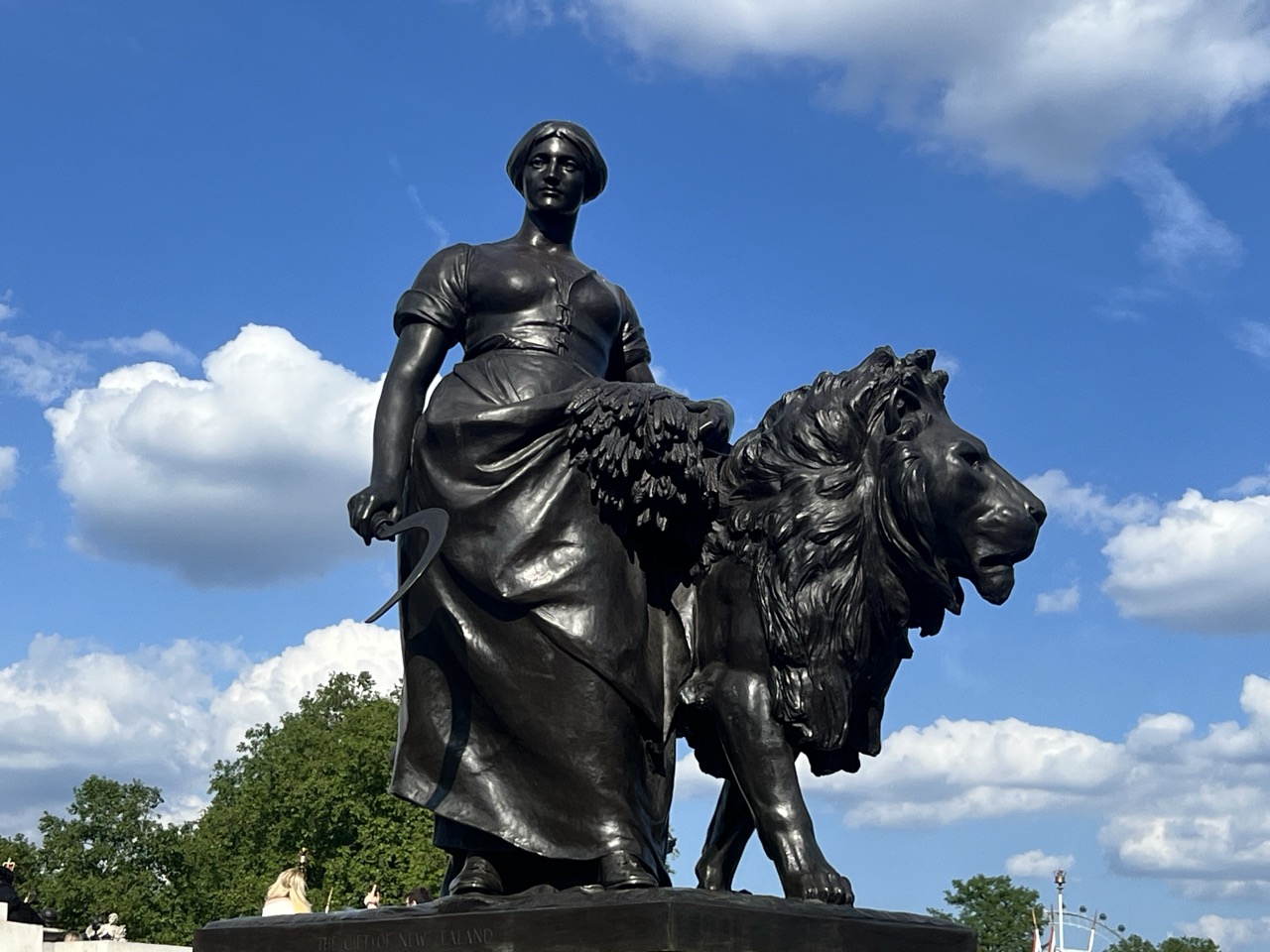
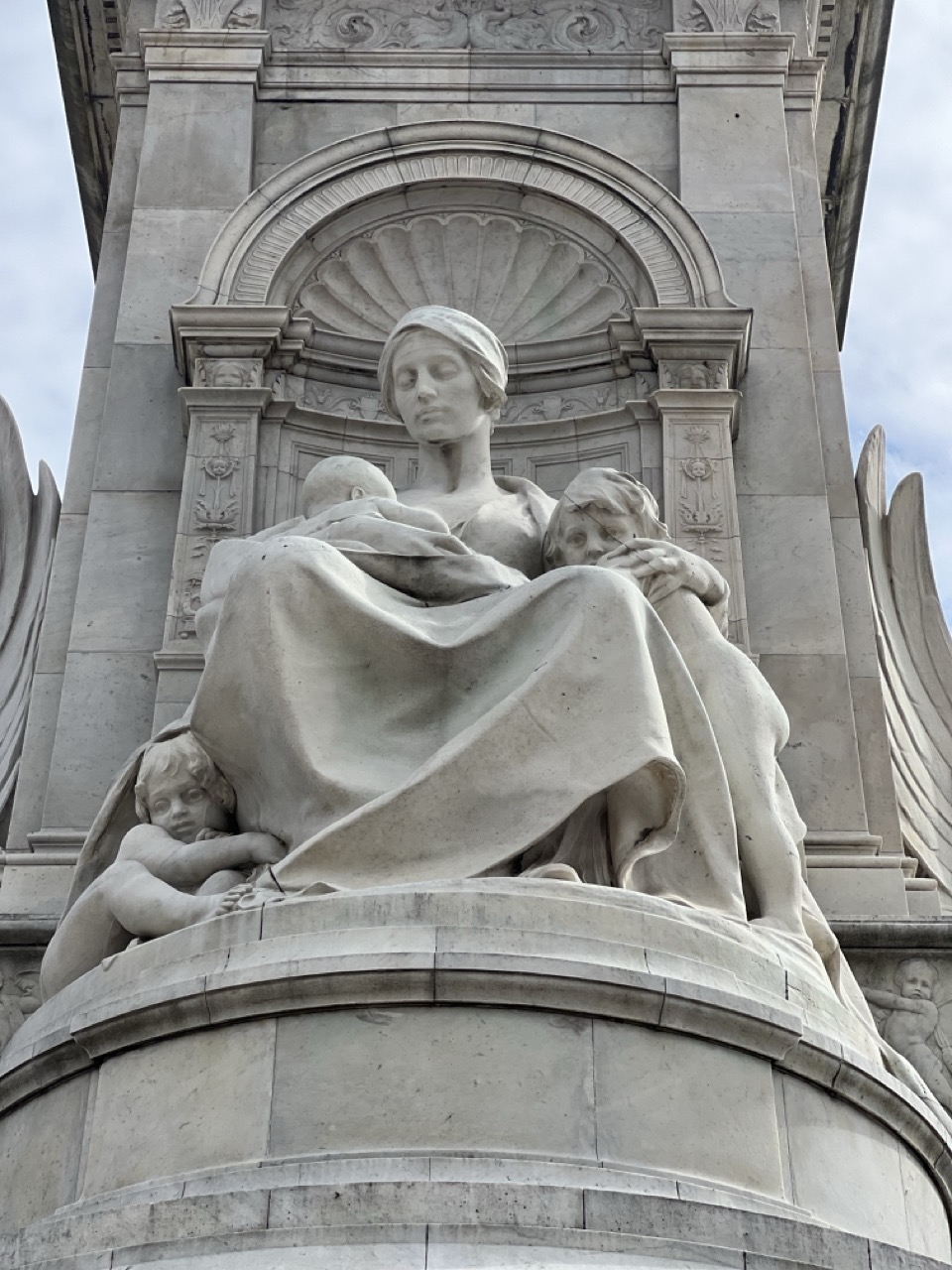
But the Victorian love of sentimentality and of allegory still plays its part. As well as the statue of Victoria Brock has carved representations of “Truth” and “Justice” on either side of the memorial, and of “Motherhood” facing the Palace. Bronze sculptures around the perimeter represent Peace, Progress, Agriculture and Manufacture, each of these figures accompanied by a lion.
On top of the memorial is a golden winged figure holding a laurel branch. She is the ‘Personification of victory’ (not Nike, the Greek goddess of victory) who was known to the Romans as ‘Victoria’. She is flanked by figures the represent ‘Constancy’ and ‘Courage’.
I’ve not been able to find contemporary commentary on the memorial or the statues, so one assumes it must have been generally positive, but a hint of contrary opinion appears in Saki’s short story ‘The Threat’. (Saki – the pen name of Hector Hugh Monroe – was an Edwardian satirist who was killed in WW1. I recommend his collection ‘Beast and Superbeasts’ as a starting point.)
In this piece campaigners for Votes for Women buy up plots of land around the capital and threaten to build exact replicas of the memorial throughout the city. When told of the plan the Prime Minister says: ‘you can’t be serious. It is a beautiful and imposing work of art — at any rate one is getting accustomed to it, … But imagine what life would be like if one saw that erection confronting one wherever one went. … What have your countrymen done to deserve such a thing?’
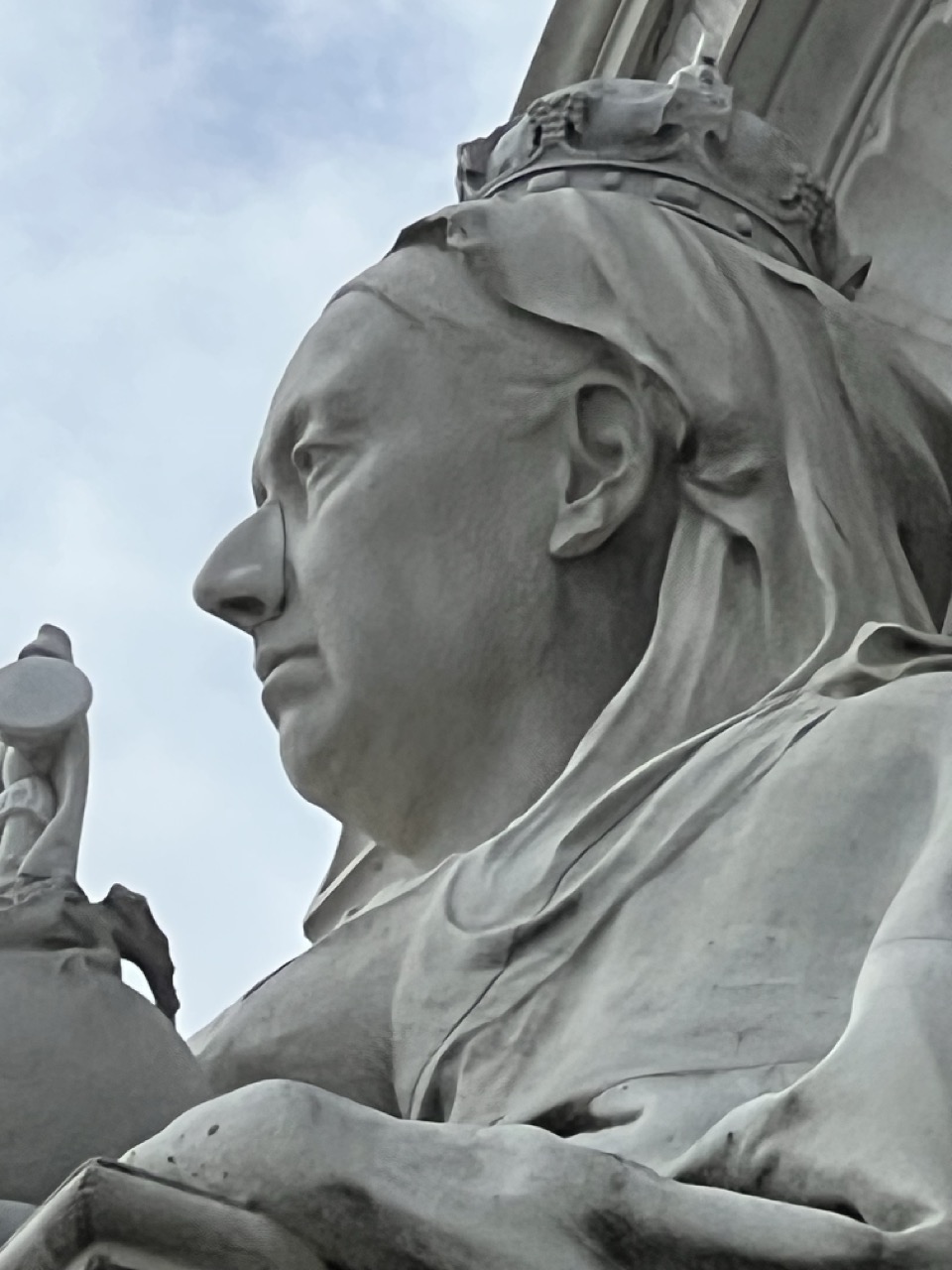
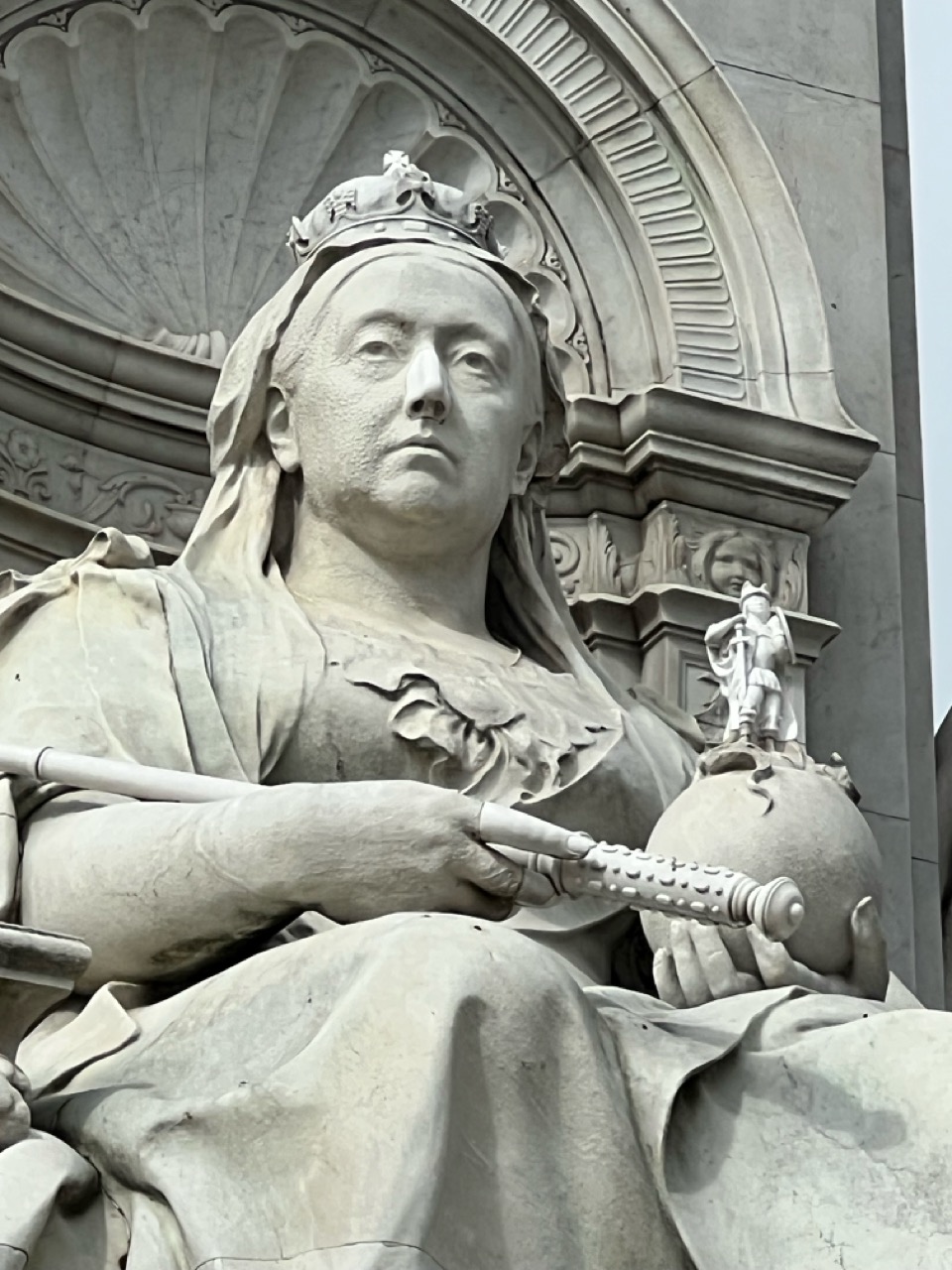
One final thing, and that is the curious case of Victoria’s nose. As you can see from my close up photo, this has quite clearly been replaced at some point (the ‘join’ is obvious, and the marble used is clearly newer and whiter than the existing statue). This seems to be a consequence of a 2012 restoration. This link to the firm that worked on the statue for Elizabeth II’s Diamond Jubilee brief “was to re-carve the missing `George and the dragon orb` held in Victoria`s left hand, which had been broken off and stolen, along with her nose, fingers and cross from her crown”. I can’t, though, find any information on when the nose was ‘lost’, not any photos of a noseless Victoria; any links that readers of this blog might have would be much appreciated.

Leave a Reply