

We’ve met the prolific sculptor George Frampton before, when we looked at his memorial to the nurse Edith Cavell, executed by the Germans in 1915, that stands in St Martin’s Place near Trafalgar Square.
He was a skilled and popular artist, his London works including sculptures of ‘Trust’ and ‘Beauty’ above the doorway to the V+A, and the (rather supercilious-looking) art deco lions at the Montague Place entrance to the British Museum, and was commissioned by ‘Peter Pan’ author J M Barrie to represent his creation.
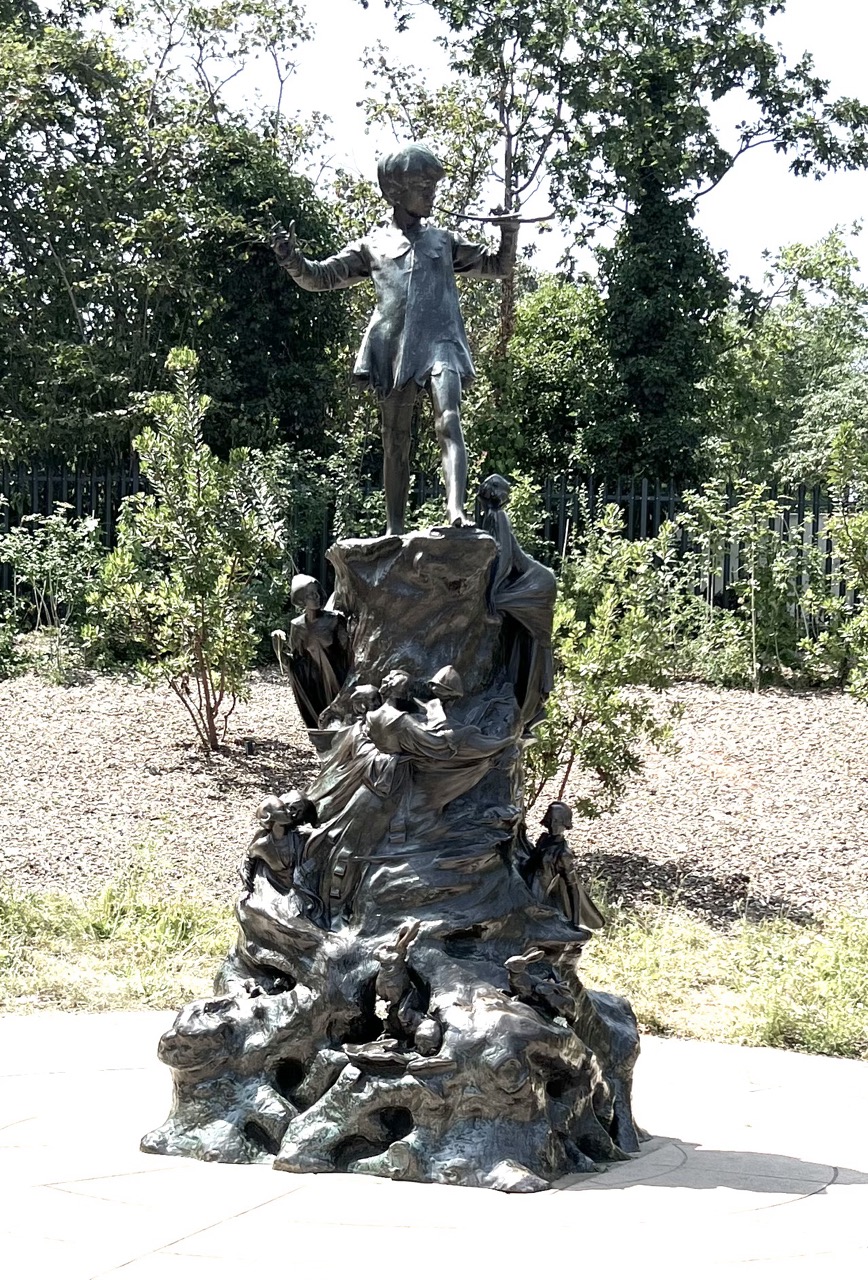
Peter Pan – ‘the boy who wouldn’t grow up’ – first appeared in Barrie’s novel The Little White Bird in 1902, but took off (oh please yourselves) after the author created a stage play around him in 1904; an immediate Christmas hit, it was revived every year for the next decade. In 1911 Barrie adapted and expanded the story as ‘Peter Pan and Wendy’.
There have been numerous movie versions, both of the original story and of the themes that are prevalent in the subtext – childhood, innocence, growing up, loss and ultimately death (‘to die would be an awfully big adventure’), but to young children it is simply an adventure – pirates! fairies! ‘red indians’! mermaids! Children fly and battle adults; it is as hugely popular today as it was in pre-WW1 London. (The Princess of Wales playground near Kensington Palace is Peter Pan themed.)
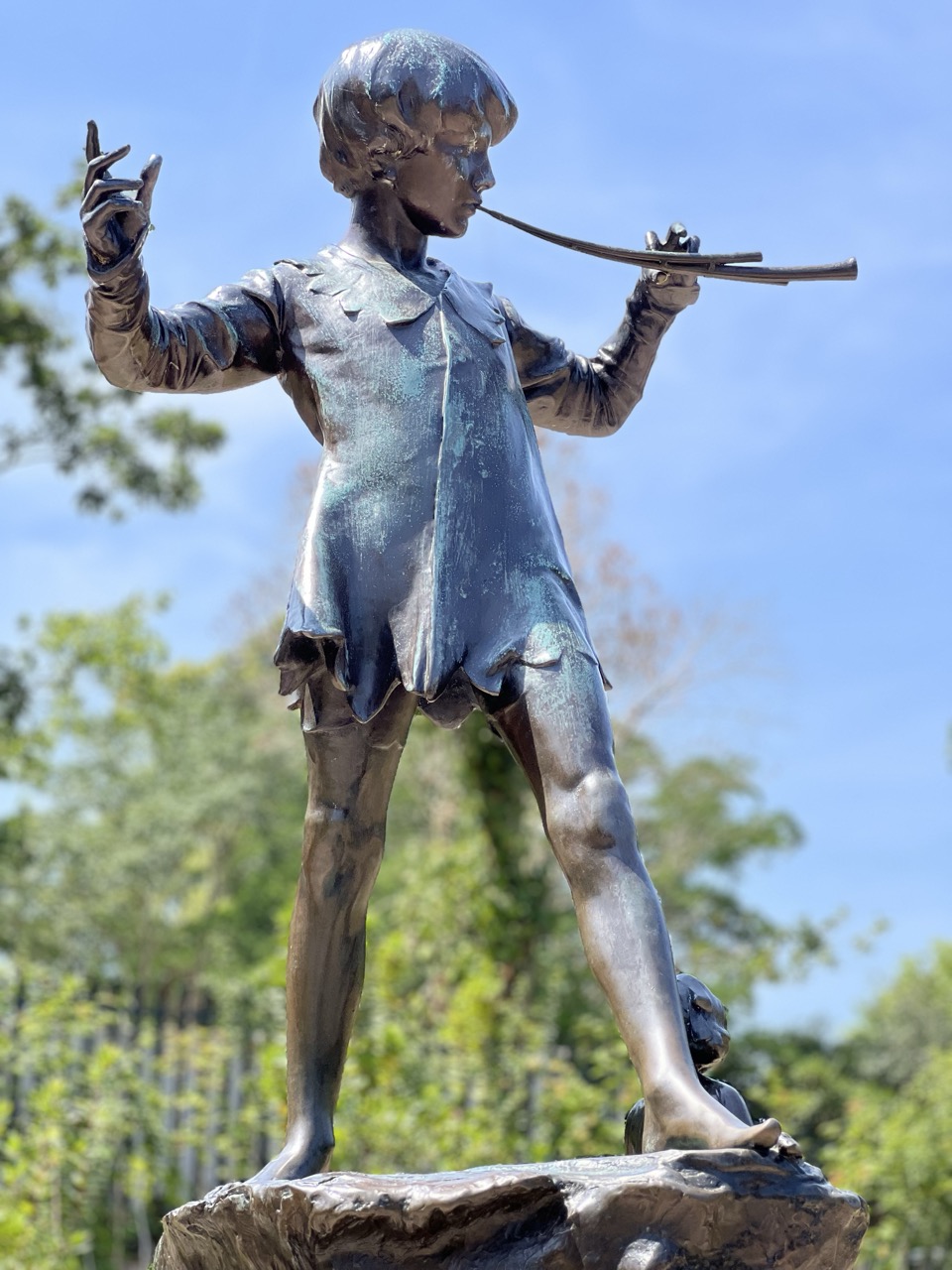

It was this popularity that inspired Barrie to commission (and pay for) the statue of his great creation, a gift to the children of London. It was to be set by the lake in Kensington Gardens at the spot where Peter lands his boat in the original 1902 story.
This was done without fanfare or ceremony, the statue being erected on 30 April 1912 with Barrie announcing “a surprise in store for children … a May-day gift” in a notice published in The Times on May 1. Many articles say the statue was erected without permission, as a Banksy-style piece of guerilla art, but this blog on the Royal Parks website references concerns by the Park authorities in 1911 that children will climb on the proposed statue, so it’s obvious that this was done with the agreement of the relevant body.
The artwork itself is a 14’ (4.3m) tall bronze, showing Peter blowing his pipe, standing on the top of a tree stump around which are rabbits, mice, fairies and other woodland creatures., Frampton’s skill keeping these just the right side of tweeness.
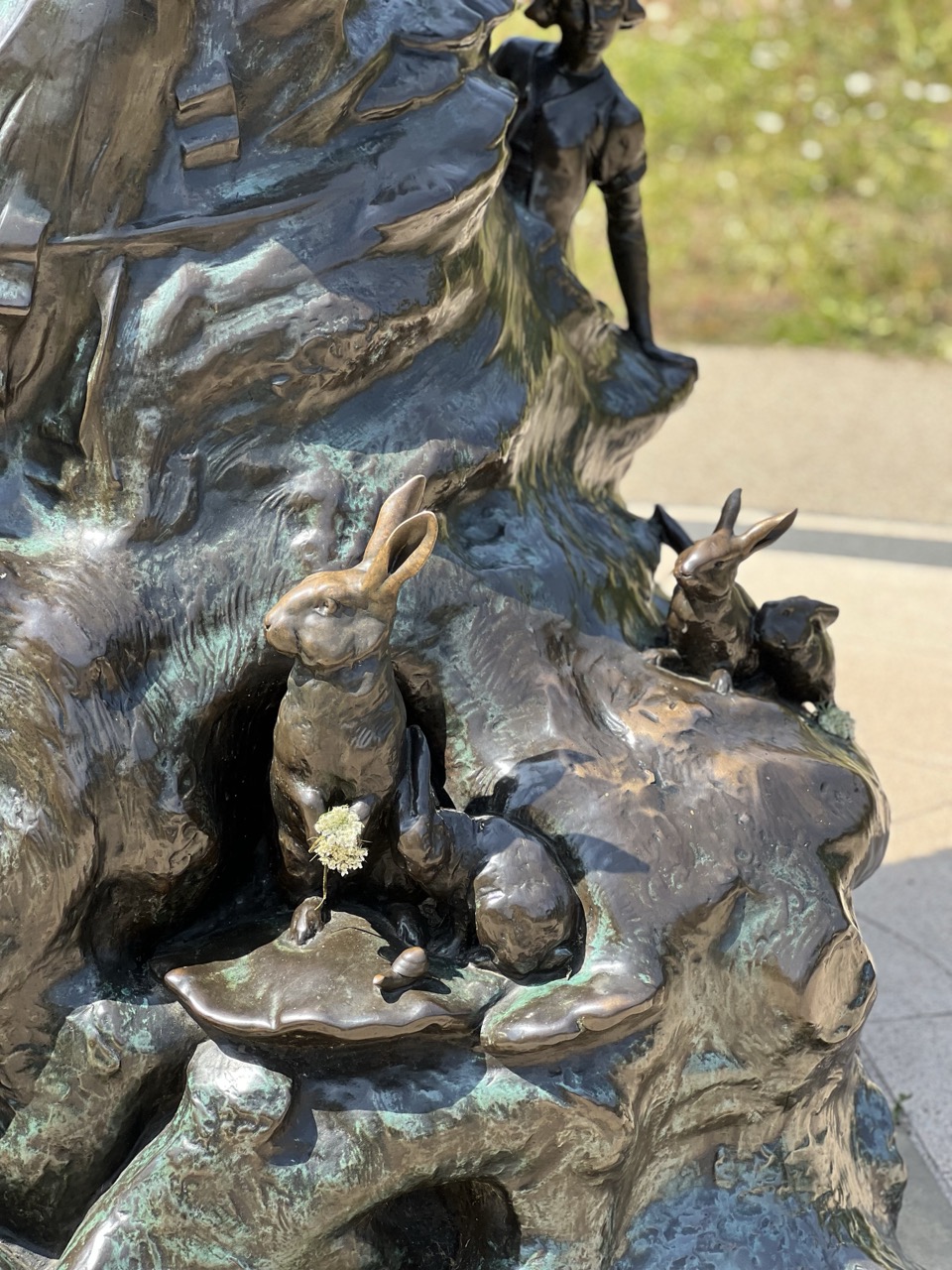
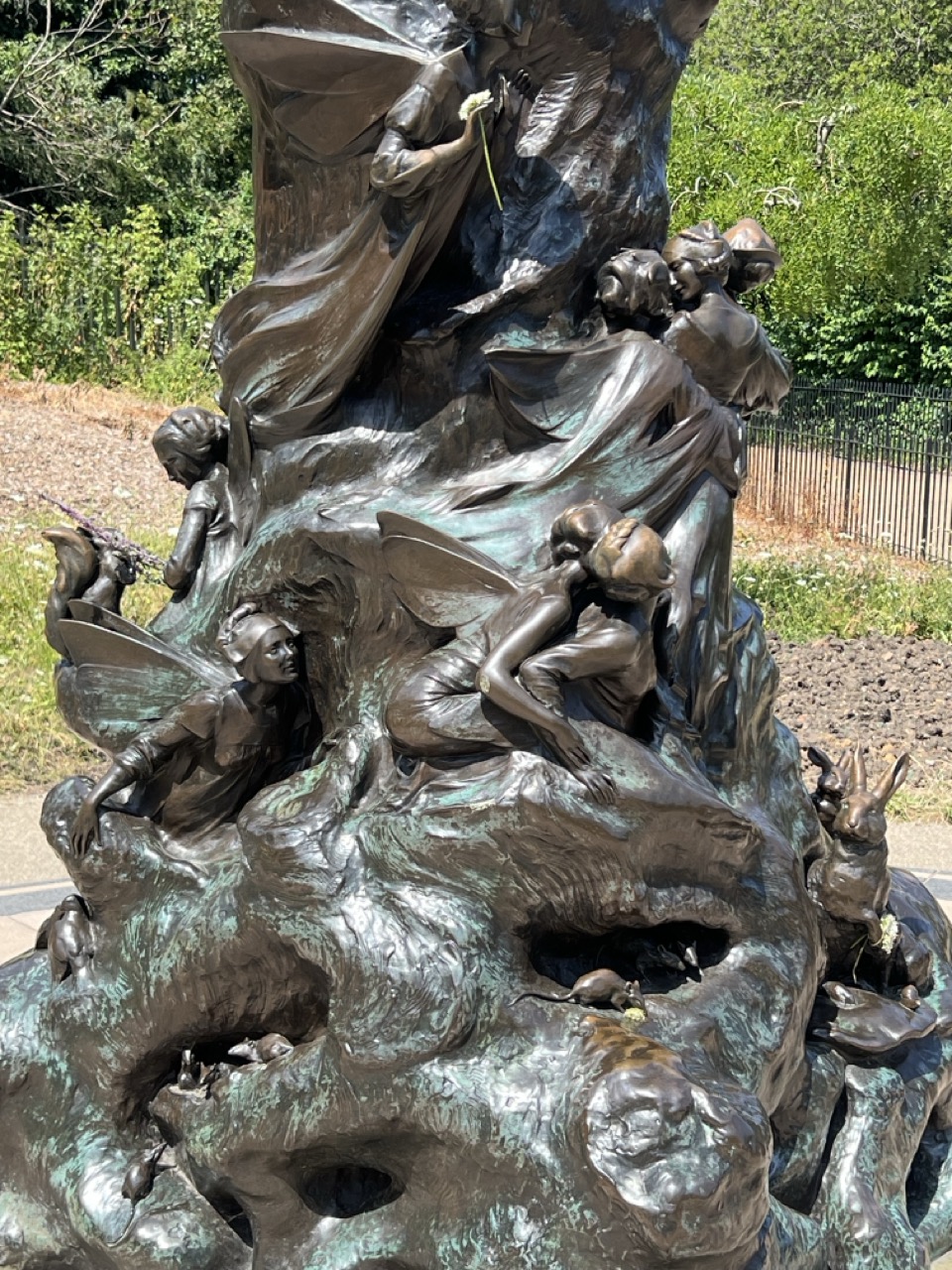
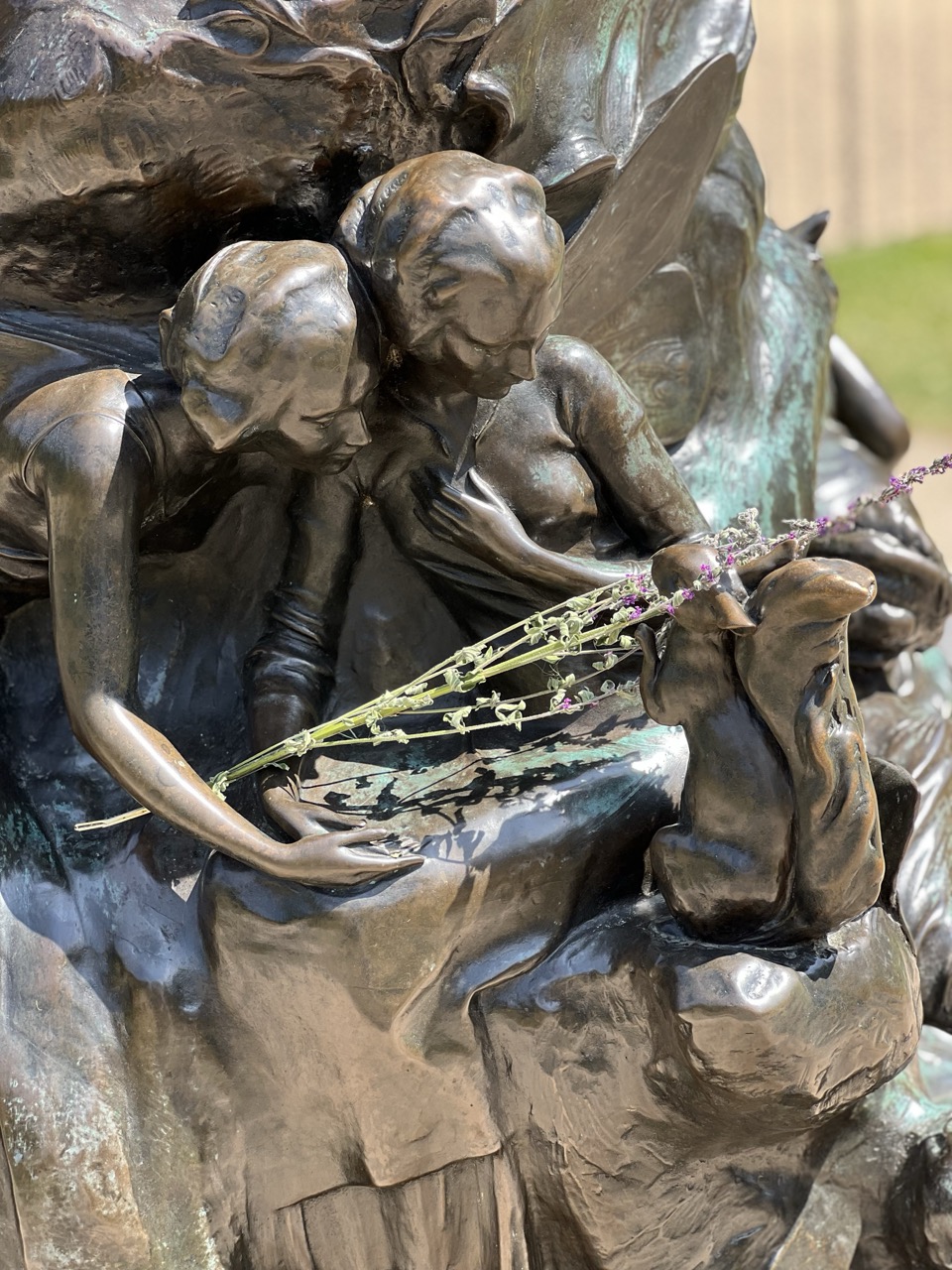
Originally it stood on the ground, but when Frampton visited the work in 1912 he noticed that children were slipping in the mud (the thing was absurdly popular, with children queuing for their opportunity to embrace the animals) and he suggested a crazy paving setting which was duly implemented. There was press-confected outrage in 2019 when the paving was taken up and the statue sited on a new plinth.
Six other casts of the work were made and can be seen around the world, in Liverpool, Perth (Australia), New Jersey, two in Canada, and Brussels (which brings us back to Edith Cavell). There is also a representation of Peter on the memorial to Frampton in the crypt of St Paul’s Cathedral.
The statue has been Grade II* listed since 1970 and (being a statue, in a park) is free to visit during Kensington Gardens’ opening hours.


To get a monthly newsletter with my latest blog posts, just enter your email here.
Or follow my facebook page for London posts and photos. And I’m also on Instagram.

Leave a Reply